
Agentic Edge & Orbit ADK
On-device agents that notice, suggest and act first
Agentic Edge understands people and their surroundings and acts through apps and devices. It handles requests, and it also knows when to suggest or act on its own. Orbit ADK lets you bring it into your product and test it quickly.
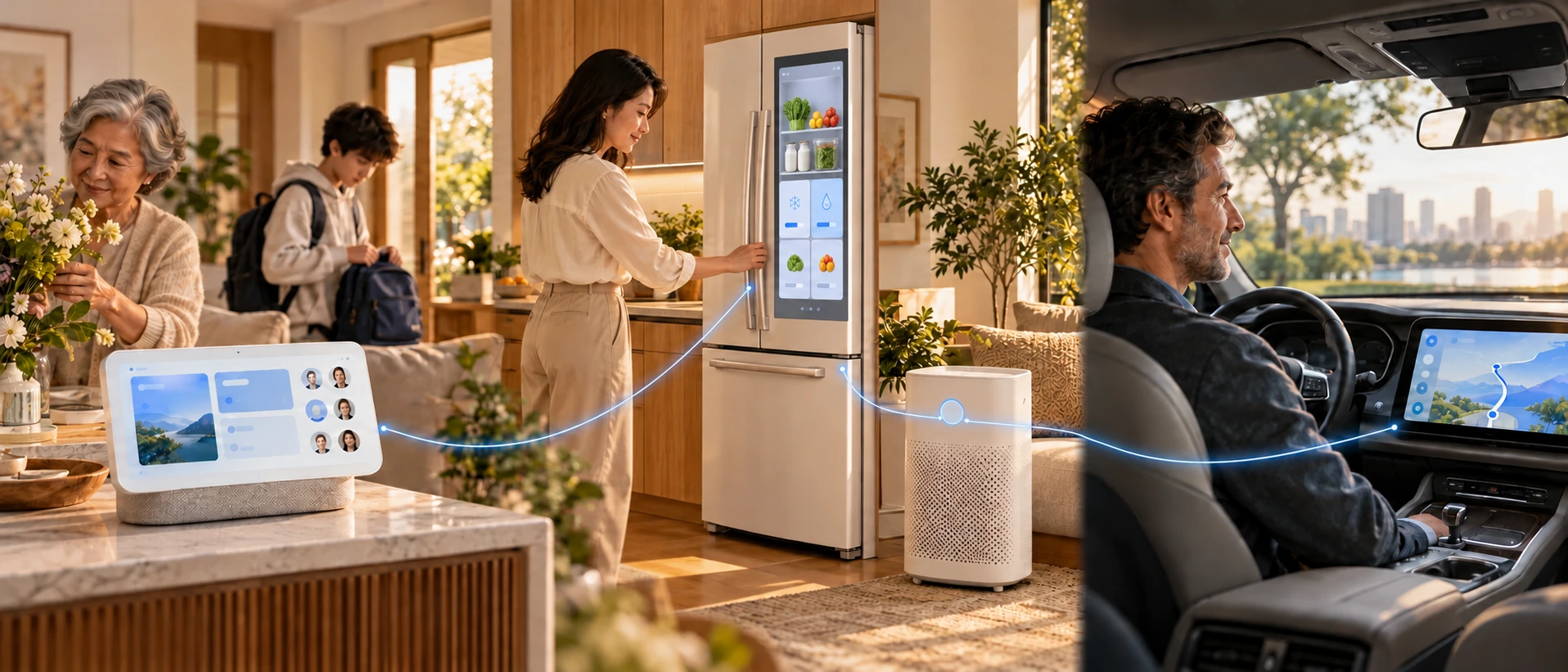
An agent that understands the situation and acts first, inside your product
Three examples that save users effort and set your product apart
Finding a document, checking on a visitor, getting ready for a movie: in each case the agent handles steps that used to take several apps and devices. Users do less, and your product stands out.
Less time searching, more time working.
Files live in different folders and apps, and finding one still means reading it. Just ask, and the product finds the right documents, shows what's in them and answers follow-up questions. Less digging, more deciding.
Understand, decide, act: how it works
It gathers input and context, decides with the AI functions it needs, then acts through the app and device controls. Each connection is built around your use scenarios.
Input and context
It reads the situation from video, sensors and services, not just user requests.
Decision and AI functions
Voice and vision understanding, retrieval and memory decide what to do. Models, runtimes and the on-device versus cloud split are matched to the target device.
App and device actions
It acts through the app and device controls, and shows the device's returned state on screen.
A development kit for bringing Agentic Edge into your product fast
A development kit for adopting and testing agents fast
Orbit ADK packages Agentic Edge as a development kit so you can run a PoC quickly. Add functions as modules and check behavior with the evaluation package. Modules are updated continuously.
What is in the kit
Reference app
The starting point for seeing the agent's flow from input to result.
Function modules
Add voice and vision understanding, retrieval, memory or device control as modules and connect them to the app flow.
Device adapter
Connects the agent to your hardware, apps and controls, and reports device state back.
Evaluation package
Built-in tools that check requests, results and device behavior against each scenario.
From install to PoC in four steps
Install the kit
Get Orbit ADK and install it on the target device.
Choose modules
Pick the function modules your product needs and configure them.
Connect the product
Link the product's hardware and controls through the device adapter.
Run and evaluate
Run the agent and check its behavior with the evaluation package.
Two ways to add your own functions
We build it
WisePlus develops the functions your product needs in the ADK module format.
You build it
Your team develops functions against the ADK API and plugs them in as modules.
We build agents that run inside products
We build on-device agents that understand context and make suggestions, and deliver AI models and device control as ready-to-run apps.

Proactive agents for home appliances
We build agents for home appliances that use voice, vision and language AI to understand each household member and the situation, then suggest and handle schedules, search, notifications and device control. Most processing happens on the device.

App and AI model integration
We integrate AI models and native libraries into apps for Android, Linux and other runtime environments, delivered as runnable apps with guides and source code.

From voice request to device state
We build Android and Linux apps that link voice requests, device control, state checks and screen updates, delivered as runnable packages for the target environment.
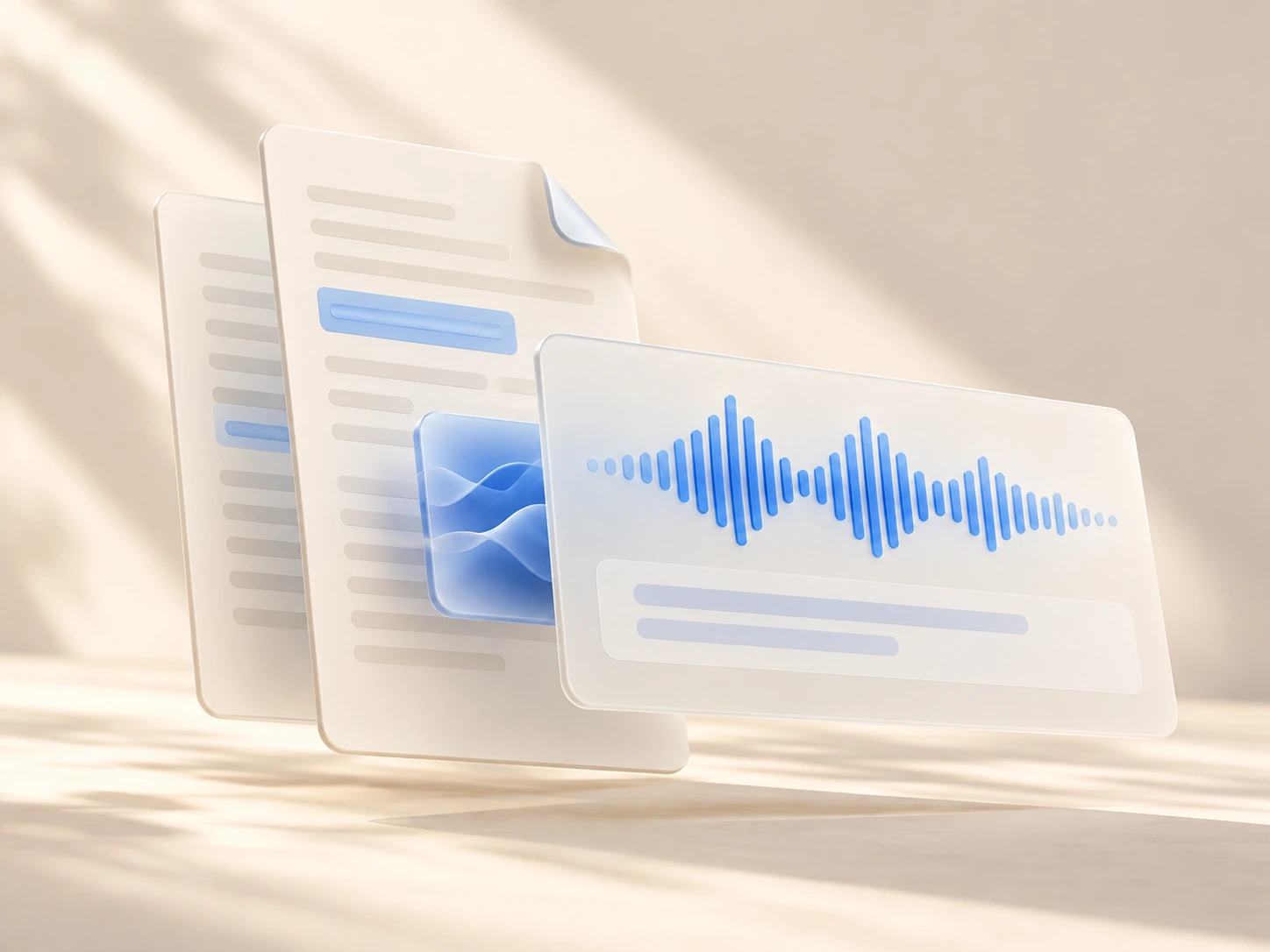
On-device voice Q&A
We combine speech recognition, a language model, speech synthesis and document search so the device can answer questions from manuals on its own.
Three things we define with you before we start
The use scenarios, the device and runtime environment, and the control and verification scope.
Use scenarios
Define the situations the agent should notice, user requests and the app or device functions to call.
Device and runtime
Review the OS, hardware resources, models and runtimes, and decide what runs on the device versus in connected services.
Control and verification
Define the control interfaces, returned state, and which actions the agent takes on its own or only with user confirmation.
What experience should your product offer?
Tell us about the scenario and the device. We'll review the AI functions and app and device connections it needs.